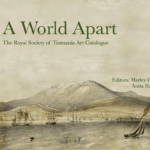
ORDERS NOW OPEN for the RST Art Collection Catalog “A World Apart”

RST Apology to Tasmanian Aboriginal people 2021.
RST Apology to Tasmanian Aboriginal people 2021.


Alongside the opening of its Hidden Treasures Walk to the West exhibition in Queenstown next month (6 March – 10 April), the Royal Society of Tasmania has launched a search for missing works by Tasmanian colonial artist William Charles Piguenit.
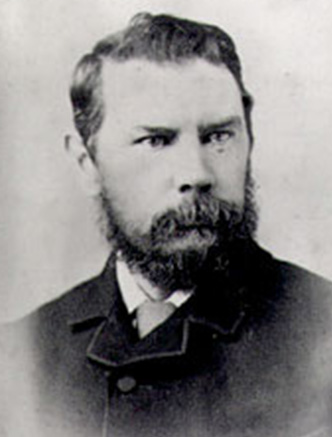
The Royal Society’s Professor Ross Large explained: ‘From 1873 to his death in 1914, William Charles Piguenit was a prolific sketcher and painter in watercolours and oils. While we know where many of his works are held, we are also certain that there are lost Piguenits to be found. Someone could have picked up a drawing at a car boot sale, or inherited a painting from grandparents – not only are they attractive pieces of historic value, they could also be worth thousands of dollars.’
Prices of W C Piguenit paintings have surged in recent years. In the 1970s and 1980s small oils and watercolours typically sold for a few hundred dollars. By 2018, the same works were fetching up to $5,000, and prices have kept on rising. In August 2025, the record was set with Pitt Water, Tasmania (1910) sold at auction for in excess of $300,000.
Professor Large said: ‘It’s partly a result of the growing interest in Tasmanian artworks and partly the recognition that Piguenit belongs in the first tier of Australian colonial artists – some would say, he was the leading Australian-born landscape painter of his time.’
West Coasters are invited to bring artworks and other family treasures to the Royal Society of Tasmania’s Arts and Antiques Roadshop on Saturday 7 March, at the Galley Museum Queenstown, from 10am to 2pm, when art and antiques expert Warwick Oakman will be on hand to offer advice and assessments. ($5 entry fee, maximum of two items per person, bookings https://www.trybooking.com/DJWWU). It’s hoped that a lost Piguenit could be among the items and can be added to the catalogue of known works.
The Hidden Treasures exhibition series aims to bring highlights from the nationally recognised and rarely seen Royal Society of Tasmania Art Collection to the regions. Oatlands and Longford played host to the first two events and now it is Queenstown’s turn.
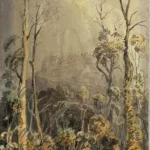
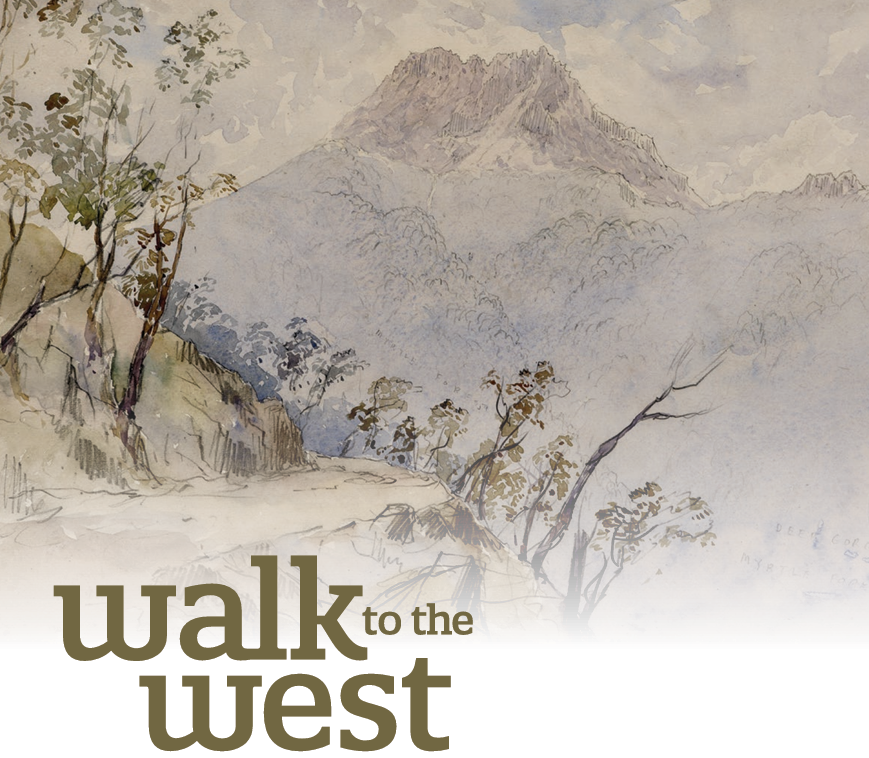
Walk to the West celebrates the wilderness paintings of Western Tasmania by W C Piguenit, which he sketched on the famous walk from Lake St Clair to Macquarie harbour along the original and just completed Linda Track in 1887. The walk inspired some of Tasmania’s earliest artistic depictions of the rugged western wilderness landscape and this unique exhibition brings together rarely seen artworks that capture the drama, geology and grandeur of the island’s West Coast. In addition to 12 Piguenit paintings, works by fellow nineteenth-century artists Simpkinson de Wesselow and Louisa Anne Meredith will be on display.
The exhibition opens on Friday 6 March and runs until 10 April at two locations, the Soggy Brolly in Orr Street, and The Galley Museum in Driffield Street, Queenstown. It is generously supported by the Australian Institute of Mining and Metallurgy – Tasmania Branch.


The Royal Society of Tasmania acknowledges, with deep respect, the traditional owners of this land, and the ongoing custodianship of the Aboriginal people of Tasmania. The Society pays respect to Elders past, present and emerging. We acknowledge that Tasmanian Aboriginal Peoples have survived severe and unjust impacts resulting from invasion and dispossession of their Country. As an institution dedicated to the advancement of knowledge, the Royal Society of Tasmania recognises Aboriginal cultural knowledge and practices and seeks to respect and honour these traditions and the deep understanding they represent.
On 15 February 2021, the Royal Society of Tasmania offered a formal RST Apology to Tasmanian Aboriginal people 2021.